Wednesday, December 7, 2011

My heart skipped a beet


Alas, my "rubylicious" recipe isn't the same (especially color-wise) without a beet. I ran out of beets so this morning I have to make up for it in volume with other items, like celery and carrot. A bunch of people around me at work have been sick and I do NOT want whatever they've been having, so I'm using ginger and lemon and as much natural vitamin C as I can pack in to each serving.

Wednesday, November 16, 2011

Oh my (green) goodness

Even when my juicer was inconveniently located in my kitchen, I never stopped juicing — but I was doing it less at home and buying more freshly made-to-order at a place nearby, and that was getting expensive.

Am renewing my commitment to myself to juice at least twice a day and try to eat mostly raw vegetable foods and less meat. Although I did not intend or care to lose weight by juicing (it's all about the blood pressure for me, as anyone following this blog may recall), I actually have lost about 10–15 pounds. I'm at 135 now, but as I begin doing more workouts with weights that number will go back up due to muscle gain.

This morning's breakfast:


And my nutritional analysis of it (only including items with greater than 10% Daily Value):

190% DV Vitamin A
172% DV Vitamin C
1146% DV Vitamin K1
15% DV Thiamin
21% DV Riboflavin
25% DV Vitamin B6
36% DV Folate
25% DV Calcium
21% DV Iron
39% DV Magnesium
43% DV Potassium
21% DV Copper
45% DV Manganese

And that was just 16 ounces of juice. You can see how easy it is to get enough of your vitamins this way.

Friday, October 28, 2011

Location, Location, Location

Putting your juicer in a place that is easy to get to, especially close to your kitchen sink, is important. I've had to move my juicer temporarily to an inconvenient location in my kitchen, and have actually been juicing less because it's not as easy and quick as having everything in the perfect spot. I'm really busy, so having the cutting board and prep on one side of the sink, with the juicer on the other, and easy clean-up right there, is essential.

One could argue that being really serious about juicing means making it work regardless of environmental circumstances, but the reality is that it's just easier and more likely to happen when all of the variables are ideal.

Saturday, October 1, 2011

The cold-buster

I hate being sick. Almost as much as I hate being sick, I hate it when people tell me to drink orange juice. Orange juice usually makes me feel worse, and it doesn't even have that much vitamin C in it — just a lot of sugar.

I made a typical combination juice with beet, red bell pepper, carrot and apple and a couple other things, but added twice as much ginger root and lemon as I normally would. Lemons are a decent source of vitamin C, and ginger root is a natural antiseptic: perfect for my throat after my sinuses/drained down it all night long.


This combination has approximately 494% of the recommended daily amount of vitamin C. Way more than a glass of orange juice. It's also readily absorbed and put to use by the body and therefore better than a vitamin C supplement, in my opinion.

Wednesday, September 28, 2011

All juicers are not created equal

While on vacation a couple weeks ago, I worried about maintaining my juicing/blood pressure/nutrition away from home. Fortunately I was staying in a rented house with a kitchen, so I just needed to find a juicer. There wasn't much selection in local stores and I ended up with a Jack LaLanne Power Juicer Express:
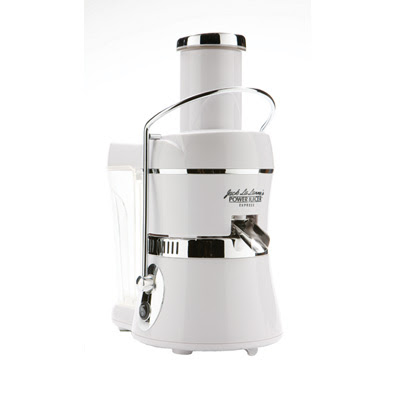


It really made me appreciate the money I spent on my Breville. Here's why:


  • Although this juicer worked, it was mostly white plastic and the first carrot that went through it stained it.

  • The spout was mounted very low and I could only fit a very short 8-ounce container under it. The juicer did not come with a pitcher or other juice receptacle. I usually make at least 16 ounces at a time. This meant that in the middle of juicing I'd have to empty the small container into a larger one, which was inconvenient and messy.

  • It was underpowered. Sure, the packaging touted it as "whisper quiet" which of course it was not, though it was certainly quieter than my Breville. But less noise meant it also took four to five times longer to juice the same amount of vegetables I can put through my Breville in under a minute. (Total juicing plus clean-up time averaged 30 minutes, versus 20 or less with my Breville model.)

  • It did not come with a cleaning brush, and the design of the centrifugal basket makes it very difficult to clean without one.

  • Hard items like beets caused juice to splatter rather than flow from the pour spout, which made a big mess and required extra clean-up.


On the plus side, at $100 it costs a third what my Breville did, so if you don't plan to juice more than once a day, and you don't mind extra clean-up, fewer accessories, and extra time spent juicing due to less power, it's not a bad juicer.

That said, it was nice to come home to my juicer.

Monday, September 5, 2011

Color

I've said this before, but it bears repeating — especially for newbies who are turned off by funky-colored juice.

If you juice things that are similar in color, you'll get better-looking juices. In other words, don't combine green things with red or very orange things, unless you're okay with muddy, swampy juice colors. Keep red and orange ingredients together, and green ingredients together.

For example:


The celery doesn't really impact the color because it's so light — but I would avoid chard, kale or anything else with a darker green color.

This combination produced a beautiful bright orange juice.


Friday, September 2, 2011

actually "garden fresh"


My friend Gail gave me cucumbers and kale from her amazing garden. Doesn't get any more organic or fresh than pulled right off the vine/plant in a personal garden!

I prepared my usual green combo (cucumber, the greens, apple, ginger, lemon) with them. It made me wish I had my own garden — I'd save so much money in the summer.